Blog · Guides
How to identify a car from a photo
Snapped a car you don't recognise? How to work out its make, model and year from a photo, from badges and lights to UK number plate age codes.
· Updated · 4 min read
You've seen something interesting at the lights, grabbed a quick photo and now you want to know exactly what it was. Here's how to work it out, starting with the fastest method and then the clues that experienced car spotters use.
The quickest way: use a car identifier app
A car recognition app can name most cars from a single photo. In CarSpot, you point your camera at the car and take a picture. The app identifies the make, model and generation, then turns the car into a collectible card with its specs, an estimated value and a rarity tier.
It works best on a clear, well-lit photo that shows most of the car. If you want to double-check the result, or you're curious how it's done, the clues below will help.
Start with the badges
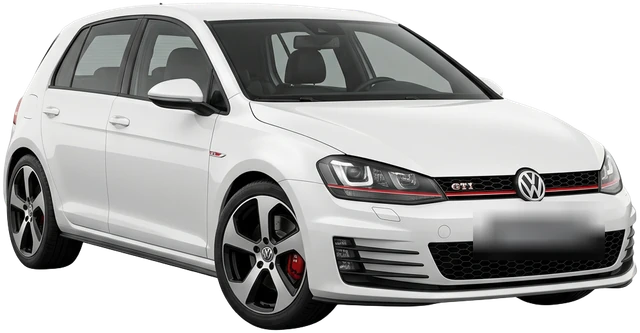
The maker's badge on the bonnet, grille or boot is the obvious first clue, but the lettering around it often matters more. Model and trim badges usually sit on the boot lid or tailgate: think GTI or R on a Volkswagen, M on a BMW, AMG on a Mercedes or RS on an Audi. A small badge can be the difference between an everyday car and a rare performance version worth several times as much. If it's the maker's logo you don't recognise, our guides to car logos with animals and car logos with wings cover the badges people mix up most.
In CarSpot, for example, a Golf GTI Mk7 is a Common card, but the limited-edition Golf GTI Clubsport S, of which only about 400 were built, is a Unicorn.
Watch out for debadged cars, too. Some owners remove the model badges, so if the brakes, wheels and exhausts look serious for the badge on the back, it may be a faster version in disguise.
Read the face: grille and headlights
Most brands give their cars a family face, so the grille can tell you the maker even when the badge is out of shot: BMW's twin kidney grille, Audi's large single-frame grille, Alfa Romeo's shield or Jeep's seven slots. The headlights then narrow down the generation, because they're often redesigned when a model is facelifted halfway through its life. Daytime running light patterns are especially useful at night or from a distance.
Check the back
Tail lights are just as distinctive. A full-width light bar, round lamps or a particular LED pattern can pin down not only the model but which version of it you're looking at. Exhausts help too: four tailpipes often point to a performance model, while electric cars have none at all.
Look at the shape and proportions
Body style narrows things down fast: hatchback, saloon, estate, coupé, convertible or SUV. Then look at the proportions. A long bonnet with the cabin set well back usually means a front-engined grand tourer. A short nose, a cabin pushed forward and air intakes just ahead of the rear wheels suggest a mid-engined supercar.
Use the number plate to tell a UK car's age
On British cars, the registration shows roughly when the car was first registered. Since September 2001, plates have followed the format AB12 CDE:
- The first two letters are a memory tag showing where the car was registered. The first letter is the region, such as L for London or M for Manchester.
- The two numbers are the age identifier. Cars registered between March and August show the last two digits of the year, so 24 means March to August 2024. Cars registered between September and February add 50, so 74 means September 2024 to February 2025.
- The last three letters are random.
Before September 2001, a single letter showed the year. Up to 1983 it came at the end of the plate (as in ABC 123V), and after that it moved to the start (as in A123 BCD). Our number plate age checker decodes current, prefix and suffix plates for you.
Telling generations apart
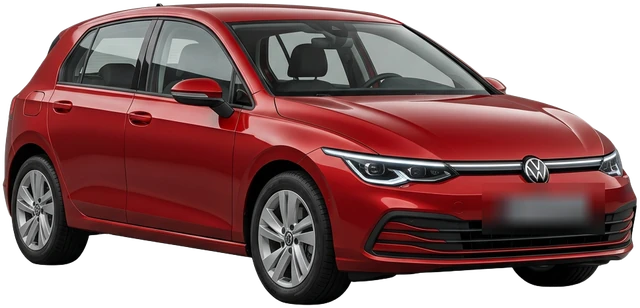
Many cars change only subtly from one generation to the next, so compare details rather than the overall shape. Take the Volkswagen Golf: the Mk8 has slimmer headlights than the Mk7 and wears the flatter, two-dimensional VW badge that the brand introduced in 2019. Performance versions add their own clues, such as the red grille stripe of the GTI and the quad exhausts of the Golf R.
- Common
Volkswagen Golf Mk8
2019–present
109 bhp
 Common
Volkswagen Golf GTI Mk7
2013–2021
217 bhp · 153 mph
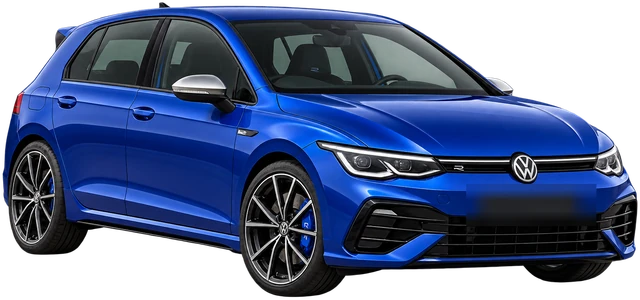 Uncommon
Volkswagen Golf R Mk8
2020–present
316 bhp · 155 mph
Tips for a photo that's easy to identify
- Get the whole car in the frame. A front three-quarter view, showing the front and one side, gives the most clues.
- Hold steady and avoid heavy digital zoom. A sharp photo from further away beats a blurry close-up.
- Shoot in good light and watch out for reflections in shop windows and glossy paint.
- If you can, take a second photo of the back. The rear badges often show the exact version.
- Never step into the road or onto private property for a photo, and keep people out of shot where you can.
CarSpot blurs number plates on card photos automatically before they can be shared. For more on where and how to find interesting cars, read our guide to car spotting for beginners.
Still stuck?
If you can't find a match, the car may be a rare special edition, a kit car or a heavily modified example. Owners' clubs and car forums are full of people who love a "what is this?" question. Or snap it with CarSpot and let the app have a go.